Tilak Varma Makes Unwanted History with Slowest IPL Knock for Mumbai Indians
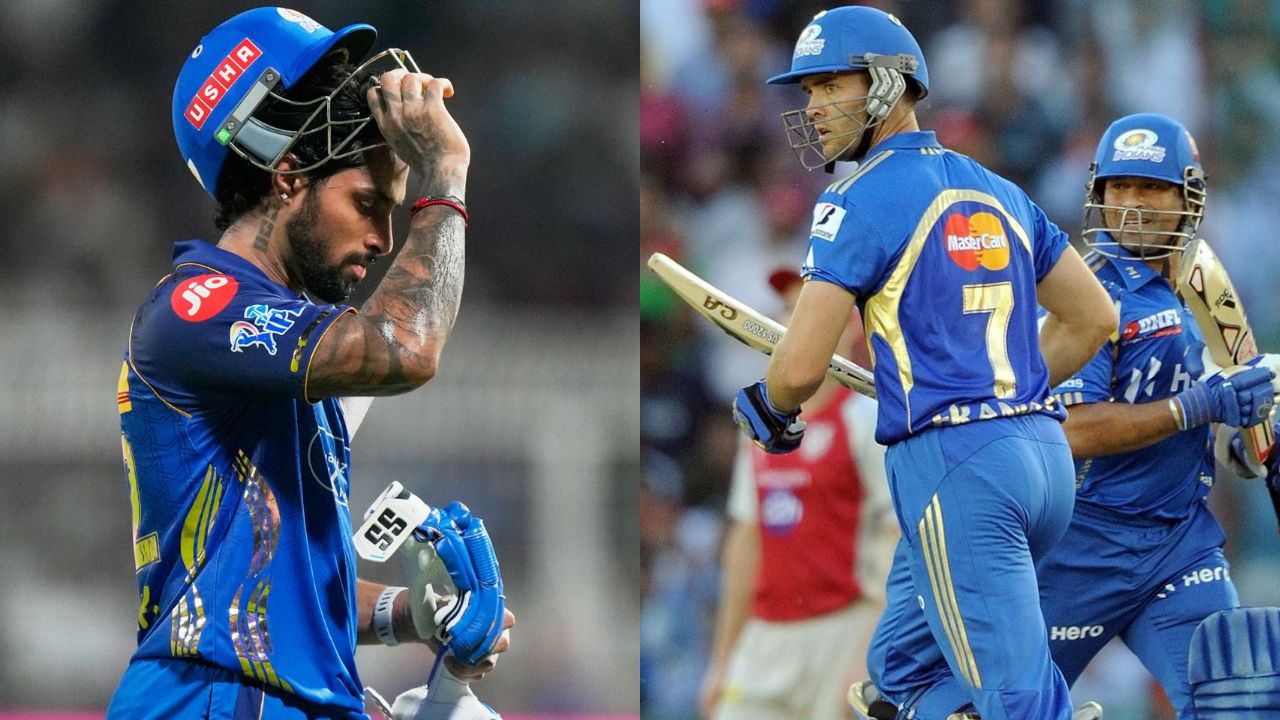
Tilak Varma‘s Painful Knock Rewrites Mumbai Indians’ Record Books—for the Wrong Reasons
Mumbai Indians hit a new low in IPL 2026 during their clash against Kolkata Knight Riders at Eden Gardens, not just in terms of scoreboard pressure, but in the annals of unwanted franchise milestones. At the heart of it: Tilak Varma and his painfully slow 20 off 32 balls—a knock now officially the slowest by any Mumbai Indians batter in IPL history under the 30-ball minimum benchmark.
A Pitch That Offered Resistance, Not Excuses
KKR won the toss and sent MI in to bat on a surface that offered both pace and spin. Early movement and consistent turn kept the Mumbai batters on the back foot. The top order folded for 23/3 before rain interrupted play for an hour. Yet, when action resumed, so did the collapse—with no revival in sight.
Enter Hardik Pandya and Tilak Varma, tasked with rebuilding. While Pandya looked to recalibrate, Varma floundered. His discomfort was evident from the outset: edgy edges, failed sweeps, and a constant hesitation between attack and defense.
Record-Breaking, But Not in the Way You’d Hope
Varma’s 20 came at a strike rate of 62.50—the slowest among all Mumbai Indians batters who have faced 30 or more balls in a single IPL innings. He broke a 14-year-old record previously held by James Franklin, who scored 22* off 34 against KKR in 2012 at 64.70 strike rate.
This unwanted feat isn’t just a statistical oddity; it’s symptomatic of a bigger issue. At a time when the team needed acceleration, Varma’s inability to rotate strike or find boundaries stifled momentum. His innings included only a single six and no fours, providing minimal relief in a dire situation.
Pressure, Expectations, and a Season Going Nowhere
Tilak Varma wasn’t meant to be a passenger. With over 3,500 runs in domestic cricket and a strong 2024 IPL campaign, expectations were high. This season, he’s scored 356 runs in 12 innings at an average of 32.26, including a century and two fifties. Solid numbers on paper—but not sufficient for a batter touted as a future mainstay.
As a senior middle-order figure, Varma was expected to anchor, not suffocate. His inconsistent form, especially in high-pressure chases or during rebuilds, has exposed MI’s fragile batting lineup. The absence of Suryakumar Yadav from his prime form has only amplified the burden on Varma—and he hasn’t shouldered it well.
MI Scrapes to a Respectable Total
Despite the top-order collapse, Mumbai managed to reach 147/8 thanks to a gritty 42-run stand between Corbin Bosch and Deepak Chahar in the death overs. The final over, bowled by Kartik Tyagi, leaked 19 runs, giving MI a slight rebound in momentum.
KKR’s bowling effort was otherwise disciplined. Saurabh Dubey, Cameron Green, and Tyagi picked up two wickets each. Sunil Narine was near unplayable, conceding only 13 in his four overs while dismissing one batter.
What This Means for Both Teams
For Mumbai Indians, the result is academic—eliminated from playoff contention and languishing at ninth on the table. Every misstep now adds to the scrutiny of their selection, strategy, and future direction.
For KKR, the stakes remain high. A win keeps their playoff hopes alive, making every run and wicket crucial. They’ll see MI’s low total as very much within reach—especially with their explosive top order.
Tilak Varma’s knock may fade from memory by the next match. But the record he set? It will linger—unless someone manages to drag an innings even slower through the mud. For now, it’s a stark reminder: in T20 cricket, stagnation is often worse than failure.

Shaan Cooper is a cricket journalist and SEO content writer from Bengaluru who focuses on breaking cricket news, live match coverage, and player performance stories. Her writing style combines fast-paced reporting with detailed cricket knowledge tailored for digital sports platforms.
More Stories