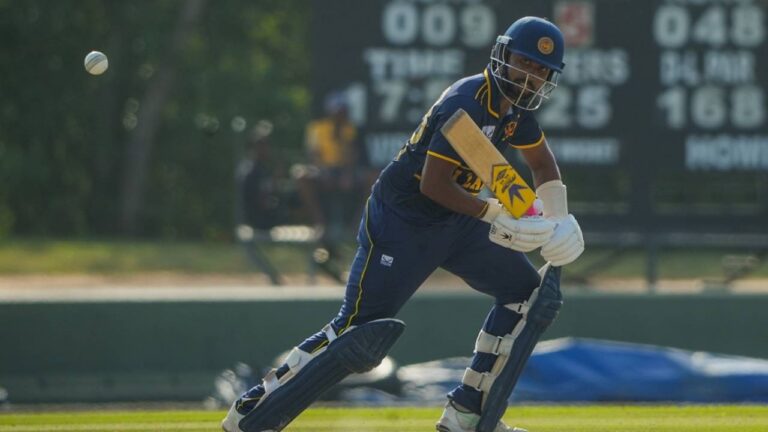
‘Every team prepares pitches that suit them’ – Shaheen defends Pakistan pitches

The Pitch Debate: Home Advantage in Focus
The conclusion of the three-match ODI series between Pakistan and Australia has left the cricketing world buzzing, not just because of the thrilling finish, but due to the intense discourse surrounding the nature of the wickets. Throughout the series, held across Rawalpindi and Lahore, Pakistan utilized square-turners designed to maximize their competitive edge against the tourists. With Australia missing several key personnel, the tactical decision to favor surfaces that neutralized the visitors’ strengths became a major talking point.
As the dust settles on a 2-1 series victory for the hosts, questions have been raised regarding the utility of these conditions for long-term planning, specifically regarding the upcoming 2027 ODI World Cup in southern Africa, where faster, bouncier tracks are expected. However, Pakistan captain Shaheen Shah Afridi remains resolute in his stance on the strategy employed by his team management.
Shaheen’s Defense of Tactical Curation
In a direct response to critics, Shaheen highlighted the necessity of tailoring conditions to favor one’s own team. Speaking after the final match, the captain noted, ‘Every team prepares pitches that suit them’ – Shaheen defends Pakistan pitches as a fundamental right of the host nation. He emphasized that the primary objective of any home series is to secure a victory, and the team is well aware of its long-term requirements.
Addressing the World Cup preparation concerns, Shaheen stated, ‘There are 15 months to the World Cup. We have Test series in the West Indies and England in which some of these players will participate, providing them the platform to adapt to different conditions. When we toured Australia under Mohammad Rizwan’s leadership, we played on green, bouncy wickets and succeeded. It is unreasonable to expect us to provide similar conditions at home when our goal is to win.’
Building Depth and Evaluating Personnel
Beyond the surface debate, the series served as a critical testing ground for Pakistan’s talent pool. The team think-tank has been proactively experimenting with younger prospects to bolster their depth ahead of the 2027 quadrennial event. Notably, Arafat Minhas made a stellar debut in Rawalpindi, becoming the first Pakistani to claim a five-wicket haul in his maiden ODI appearance, subsequently earning the player of the series award.
Consistency was a key theme for the side, as the team management maintained the same playing eleven throughout all three matches. While this decision meant limited opportunities for some squad members like Ahmed Daniyal and Rohail Nazir, it allowed the leadership to observe how core players handled high-pressure scenarios.
The Role of Experience: The Shadab Khan Factor
Perhaps the most debated inclusion in the squad was that of all-rounder Shadab Khan. Returning to the ODI fold for the first time since the 2023 World Cup, Shadab faced early struggles with the ball, appearing as the most expensive bowler in the first two encounters. However, his contribution with the bat proved vital.
His composed 71 in the second ODI provided a glimmer of hope during a difficult chase, and his calm 29 not out in the decider ultimately secured the series. Shaheen praised this resilience, noting that experienced players possess the maturity required to navigate crunch situations on challenging tracks. ‘It is only mature players who can win you such matches in tough conditions,’ Shaheen remarked, pointing to Shadab’s disciplined bowling and batting stability as evidence of his value.
Looking Ahead
With the ODI series concluded, Pakistan enters a transition phase. The team has a scheduled break of approximately six weeks before shifting focus to the longest format, with a challenging Test tour of the West Indies on the horizon. This will be followed by a series in England and a home tour against Sri Lanka later in the year. While the white-ball focus takes a brief hiatus, the lessons learned from the recent tactical experimentations—both regarding surface preparation and player selection—will undoubtedly form the bedrock of Pakistan’s strategy as they continue their march toward the 2027 World Cup.
Shaan Cooper is a cricket journalist and SEO content writer from Bengaluru who focuses on breaking cricket news, live match coverage, and player performance stories. Her writing style combines fast-paced reporting with detailed cricket knowledge tailored for digital sports platforms.
More Stories