Sanju Samson vs Ruturaj Gaikwad: IPL Captaincy Comparison & CSK Leadership Debate
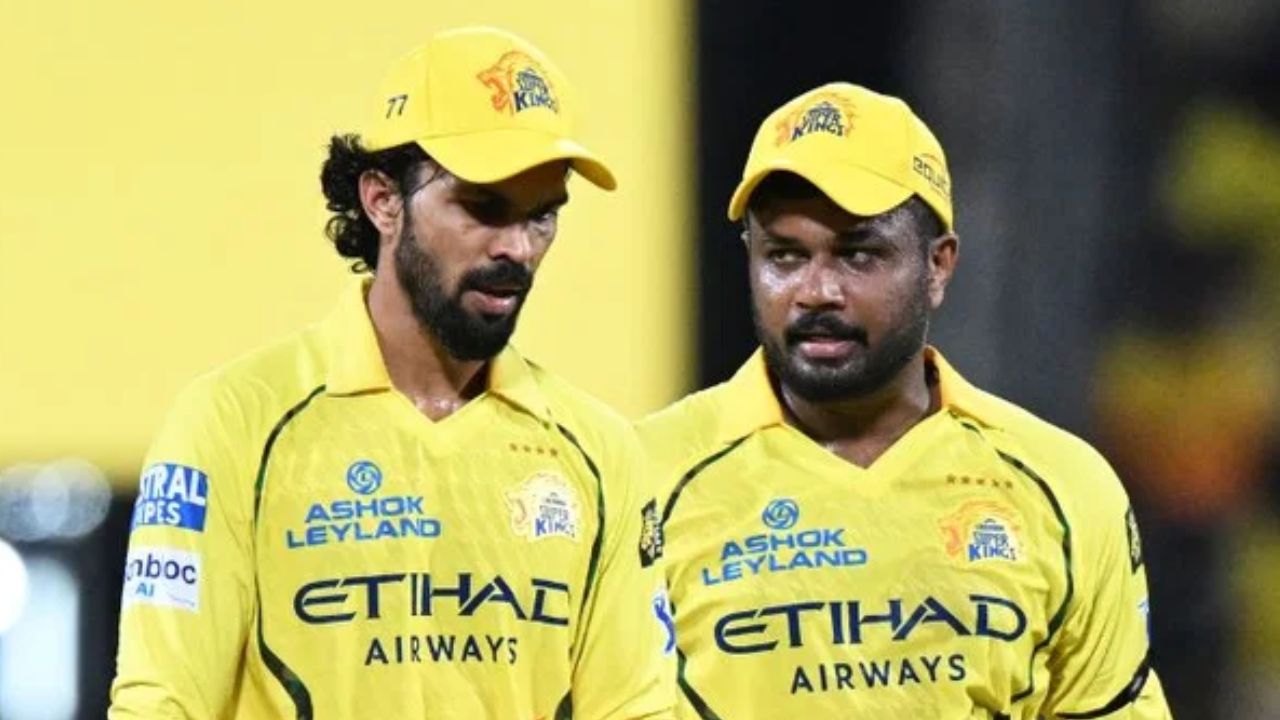
The Captaincy Conundrum at Chennai Super Kings: Gaikwad Under the Microscope
The aura of the Chennai Super Kings, long synonymous with unwavering success and stable leadership, has faced an unprecedented test following a disappointing IPL 2026 campaign. The team’s struggles have cast a long shadow over Ruturaj Gaikwad’s tenure as captain, placing his leadership squarely in the crosshairs of cricket pundits and fans alike. A crushing home defeat to Sunrisers Hyderabad effectively extinguished CSK’s playoff aspirations, prompting former cricketers to openly suggest a radical leadership change, with ex-Rajasthan Royals skipper Sanju Samson emerging as a prominent candidate for the franchise’s top job.
Gaikwad’s two-year stint at the helm has unfortunately not yielded a top-four finish for the Super Kings, a stark contrast to the franchise’s storied history. Compounding the team’s woes, his individual batting form has also experienced an alarming dip. In parallel, Sanju Samson has quietly, yet consistently, built a commendable captaincy resume with the Rajasthan Royals, demonstrating a maturity and strategic acumen that has not gone unnoticed. As the whispers about a potential leadership revamp evolve into a full-blown debate, a detailed statistical comparison of these two Indian cricketing talents becomes imperative as we look ahead to IPL 2027.
Ruturaj Gaikwad’s CSK Captaincy: A Tale of Missed Opportunities
Ruturaj Gaikwad inherited the Chennai Super Kings captaincy in 2024, stepping into the colossal shoes left vacant by the legendary MS Dhoni – an undeniably challenging, almost impossible, brief for any player. Across his two full seasons guiding the Yellow Army, the numbers unfortunately paint a picture of mediocrity. In 32 IPL matches as CSK captain, Gaikwad has overseen just 14 victories against 18 losses, resulting in a win/loss ratio of a mere 0.777. Crucially, under his leadership, the team has failed to reach the playoffs in either season, with 2026 proving particularly grim. While mathematically still alive, CSK’s chances are remote, contingent on a confluence of improbable external results.
Beyond the team’s performance, Ruturaj Gaikwad’s individual returns as captain in the IPL have been modest. He has accumulated 1,026 runs in 32 innings while leading CSK, at an average of 38.00, including one century. While this average appears respectable on paper, it significantly masks a steep decline in form during the 2026 season. In the latest edition of the tournament, he managed only 321 runs at a subdued average of 29.18, with a strike rate of 120.68. These figures fall considerably short of the aggressive batting benchmarks expected in modern T20 cricket, especially for an opening batter. Looking at his broader captaincy career across all T20s, including domestic games, he averages 40.17 in 54 matches, but his diminished 2026 IPL performance has undeniably dragged this overall statistic down.
Gaikwad the Batter: A Different Story Unfolds Without the Armband
An interesting facet of Gaikwad’s career is the stark contrast in his performance when he is not burdened by captaincy. His non-captaincy IPL numbers are nearly identical to his captaincy figures, averaging 39.06 in 52 matches. This suggests that the added responsibility of leadership has not served as a catalyst for an uplift in his batting prowess; rather, it appears to have maintained a consistent, albeit recently dipping, output. Furthermore, Gaikwad exhibits a notable home-away split in his captaincy batting statistics. At the familiar confines of Chepauk, his home average as captain is a commanding 59.11. However, this figure plummets dramatically to 26.11 when playing away from home conditions, indicating a significant reliance on home advantage for his top performances while leading the side.
Sanju Samson’s IPL Captaincy: Consistency and Growth at Rajasthan Royals
In stark contrast to Gaikwad’s tenure, Sanju Samson has helmed the Rajasthan Royals since 2021. While his captaincy has not yet brought a coveted IPL trophy, it has been remarkably more stable and impactful than Gaikwad’s. In 67 IPL matches as RR captain, Samson boasts 33 wins, 32 losses, one tie, and one no-result, translating to a respectable win/loss ratio of 1.031. Under Samson’s astute leadership, the Rajasthan Royals have consistently remained competitive, frequently contending for playoff berths, and have successfully reached the knockout rounds on two occasions. This demonstrates a greater degree of team stability and strategic success.
Crucially, Samson’s batting performance has also shown a clear upward trajectory since assuming the captaincy. In the IPL alone, he averages 36.08 as captain, registering a high score of 119. When his entire captaincy record across all T20 formats is considered, encompassing 105 matches and nearly 3,114 runs, his average rises even further to 36.63. Significantly, Samson appears to thrive under the added responsibility, performing better with the captain’s armband than without it, suggesting that leadership brings an enhanced layer of focus and maturity to his game.
Samson the Batter: Captaincy as a Catalyst for Enhanced Performance
Further strengthening his case, Samson’s statistics as a non-captain in the IPL reveal an average of just 29.81 from 123 innings. This considerable difference underscores the notion that the captaincy has indeed brought a new level of consistency and improved decision-making to his individual game. His recent form further solidifies this argument. Across the 2025 and 2026 domestic and IPL seasons, his captaincy average has remained robust, registering 46.55 in 2025 and a commendable 58.25 in the early domestic matches of 2026. This sustained high-level performance under pressure highlights his growing comfort and effectiveness as a leader and a batter.
Another key indicator of Samson’s balanced performance is his consistency across different playing conditions. As captain, he averages 35.61 at home and 37.95 away, a remarkably balanced spread that contrasts sharply with Gaikwad’s heavy reliance on home pitches. This ability to perform consistently irrespective of the venue is a valuable asset for any leader in the demanding IPL environment.
Tactical and Batting Differences: A Deeper Dive into Leadership Styles
The statistical differences between Gaikwad and Samson extend beyond individual averages and win/loss ratios, delving into their distinct tactical approaches and batting preferences as captains.
- Batting First vs. Chasing: As captain, Gaikwad tends to flourish when CSK bats first. His average in such matches stands at 47.34, and the team’s victories often stem from successfully setting imposing totals. However, when tasked with chasing, his average drops noticeably to 30.36, and CSK’s record when fielding first and then pursuing a target has been consistently poor under his leadership.
- Samson’s Adaptability: Samson, on the other hand, exhibits greater prowess as a second-innings captain. His average when fielding first (and subsequently chasing) is an impressive 39.87, compared to 33.61 when batting first. This suggests a superior ability to manage and execute run chases, a critical skill in the high-pressure T20 format where target assessment and strategic pacing are paramount.
Team performance metrics further elucidate the contrast. CSK, under Gaikwad, has scored at a marginally higher run rate of 9.15 runs per over, compared to RR’s 8.86 under Samson. However, this slightly higher scoring rate for CSK is often negated by their tendency to concede more runs and, ultimately, win fewer games. Rajasthan Royals’ slightly lower scoring rate is frequently offset by smarter in-game management, more disciplined bowling, and a superior tactical execution, culminating in a better overall win/loss ratio. Samson’s RR side has consistently hovered around the 50% win mark or above, demonstrating a competitive edge, while Gaikwad’s CSK has unfortunately slipped below this benchmark.
Conclusion: The Statistical Edge Points to Samson for CSK’s Future
Given Chennai Super Kings’ long-standing philosophy of stable and consistent leadership, making a change at the top is undoubtedly a monumental decision. However, the compelling statistical evidence and performance trends over the past few seasons lend significant weight to considering an alternative perspective. Sanju Samson emerges as a proven IPL captain with over five years of valuable experience, showcasing a superior win/loss record and a knack for guiding his team into the playoffs consistently. He would inherit a team in transition, yet one that undeniably still possesses a core of match-winners and a formidable fan base.
Ruturaj Gaikwad, while a talented batter, has technically missed his opportunity to fully prove his mettle as a captain in IPL 2026, and any further chances would have to await the next season. Without a dramatic and significant turnaround in the IPL 2027 season, the calls for a definitive leadership change within the CSK franchise are likely to intensify. As of now, the statistical edge in captaincy, individual batting performance under pressure, and overall team management firmly belongs to Sanju Samson, presenting a strong case for him to potentially lead the next chapter of the Chennai Super Kings.

Rohan Kapoor is a cricket editor and sports content analyst based in New Delhi with over 6 years of experience covering IPL, T20 leagues, and international cricket. He specializes in match analysis, player statistics, and tactical breakdowns, bringing data-driven insights to modern cricket audiences across India.
More Stories